The 16th Gyalwang Karmapa
Dharma King
Introduction
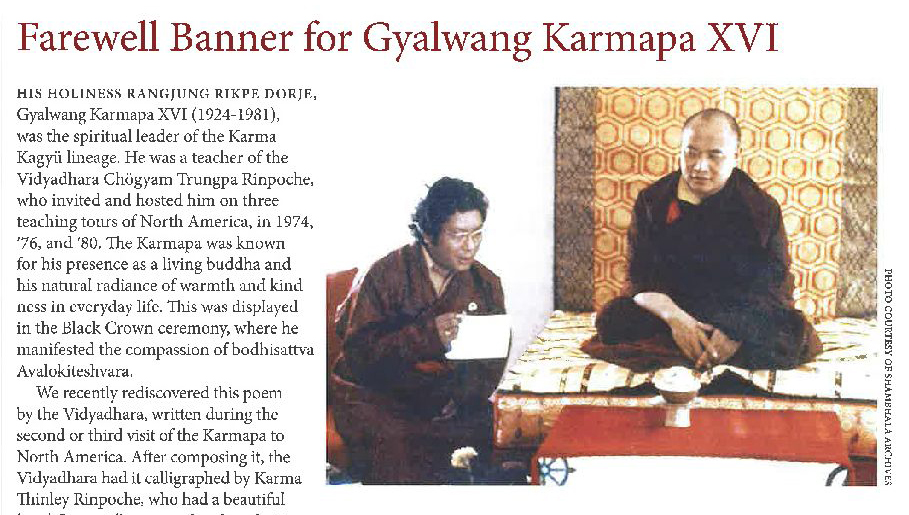
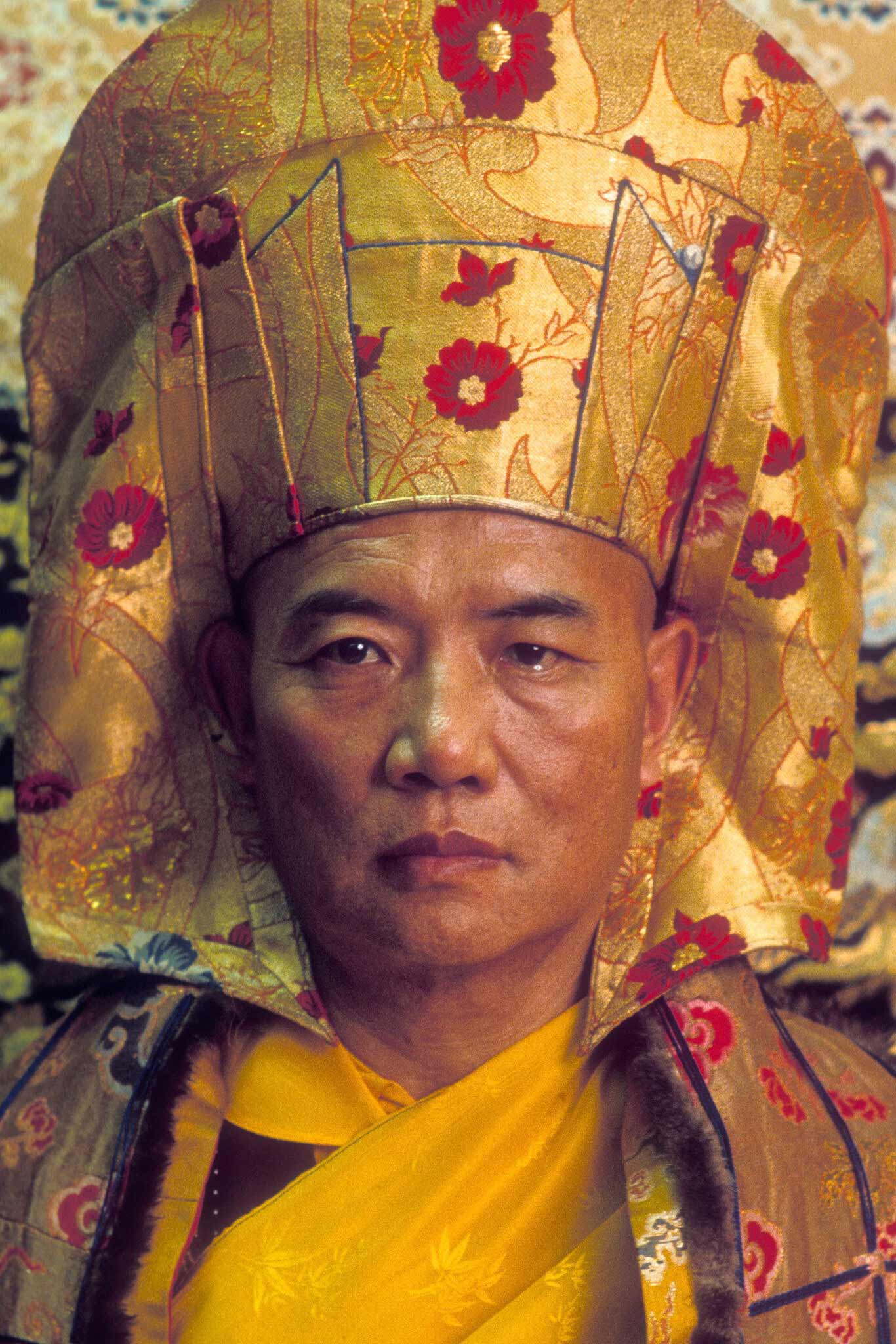
The 16th Gyalwang Karmapa, Rangjung Rigpe Dorje (1924–1981), was one of the most influential Tibetan Buddhist masters of the 20th century. He was the head of the Karma Kagyu school of Tibetan Buddhism and is widely respected for helping preserve and spread Tibetan teachings during a time of major upheaval. He is especially known for his strong presence and charisma, emphasis on meditation (especially Mahamudra), and bringing Tibetan Buddhism to a global audience.
His Holiness visited the United States several times in the 1970s and 80s, and his activities there were focused on establishing Tibetan Buddhism in the West in a direct, experiential way. They were not focused on building institutions at scale—rather on planting seeds: establishing authentic transmission, training key students, and creating a living connection between Tibetan Buddhism and Western practitioners.
During his last trip to the U.S. in 1981 he passed away in a hospital in Zion near Chicago. His death is remembered by followers as deeply meaningful, with many noting the composure and awareness he maintained. The Karmapa Center 16 is located in a close approximity to that place.
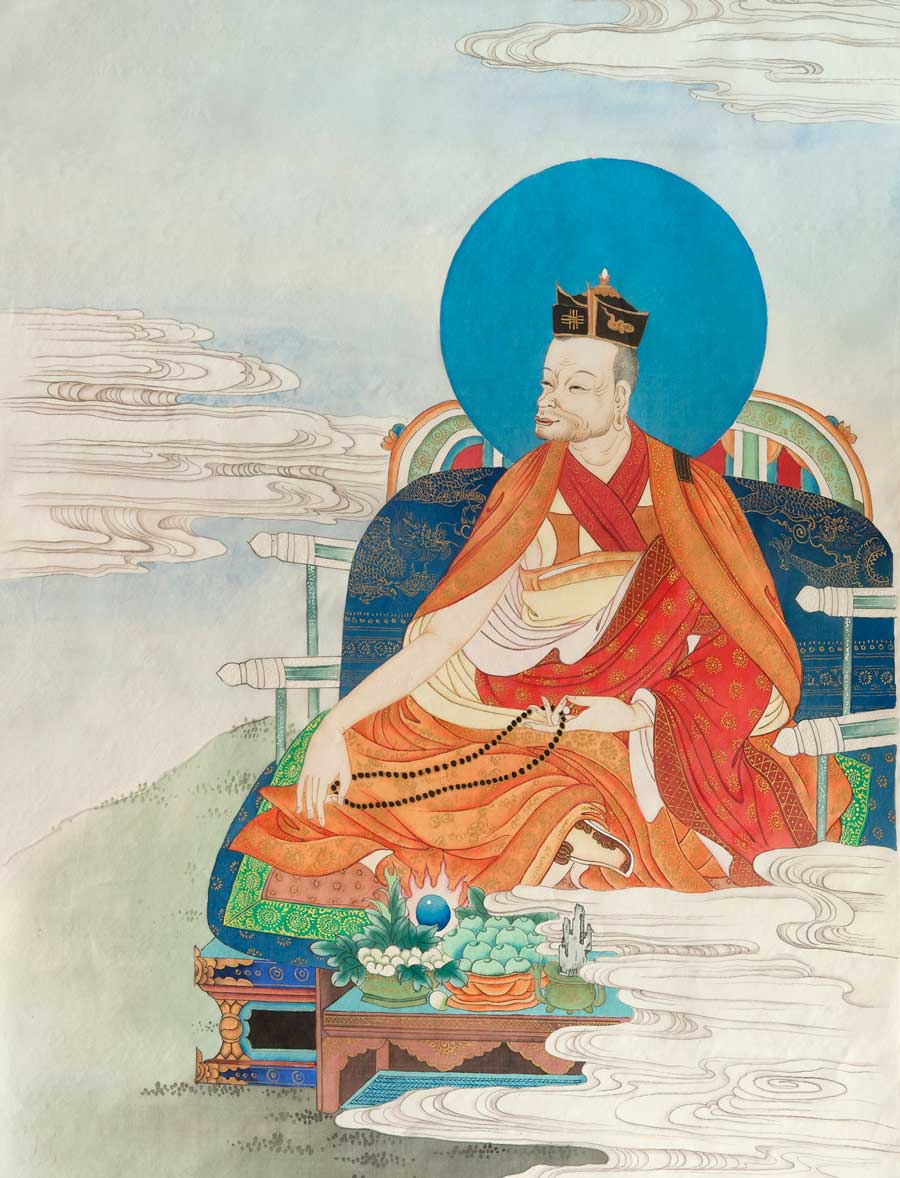
Lineage of the Karmapas
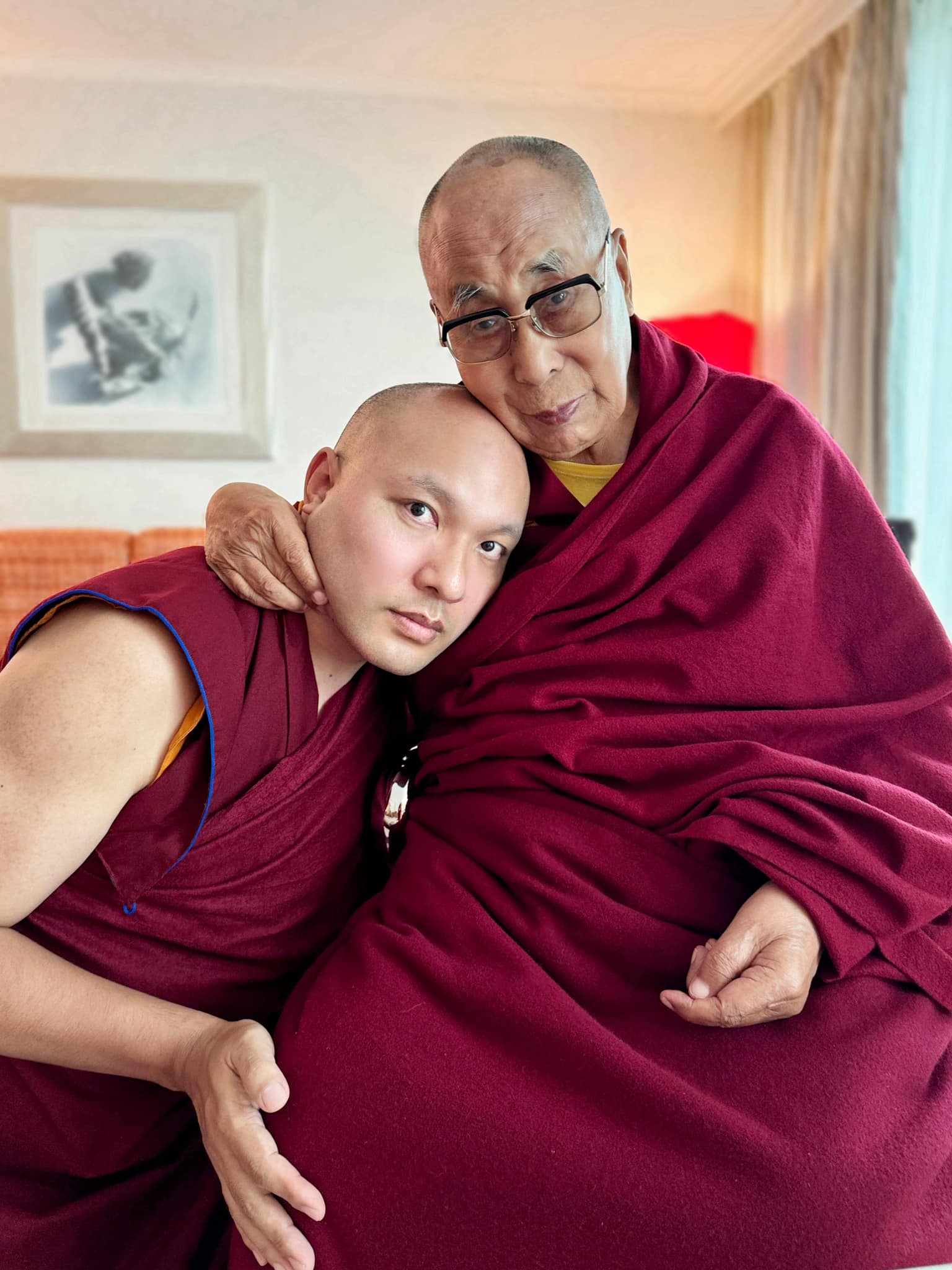
The 16th Karmapa, Rangjung Rigpe Dorje, was especially significant for preserving Tibetan Buddhism after the exile from Tibet. He undertook the historic work of reprinting and distributing the Kangyur and Tengyur—the core canon of Buddhist scriptures and commentaries—to monasteries across India, Nepal, Bhutan, Tibet, and the United States, a deed no previous Karmapa had performed.
His successor, the 17th Karmapa Ogyen Trinley Dorje, was notable as the first reincarnate lama recognized by both the Dalai Lama and the Chinese government, and as a young boy he rebuilt Tsurphu Monastery, the traditional seat of the Karmapas, after it had been damaged during the 1959 uprising and the Cultural Revolution.
In 2000 the 17th Karmapa escaped Tibet and at that time His Holiness the Dalai Lama offered him a residence at Gyuto Monastery near Dharamsala, India. Since then he travels, gives teachings and leads the Kagyu lineage both in Tibet and exile.
For more information please go to the 17th Karmapa's official website: kagyuoffice.org
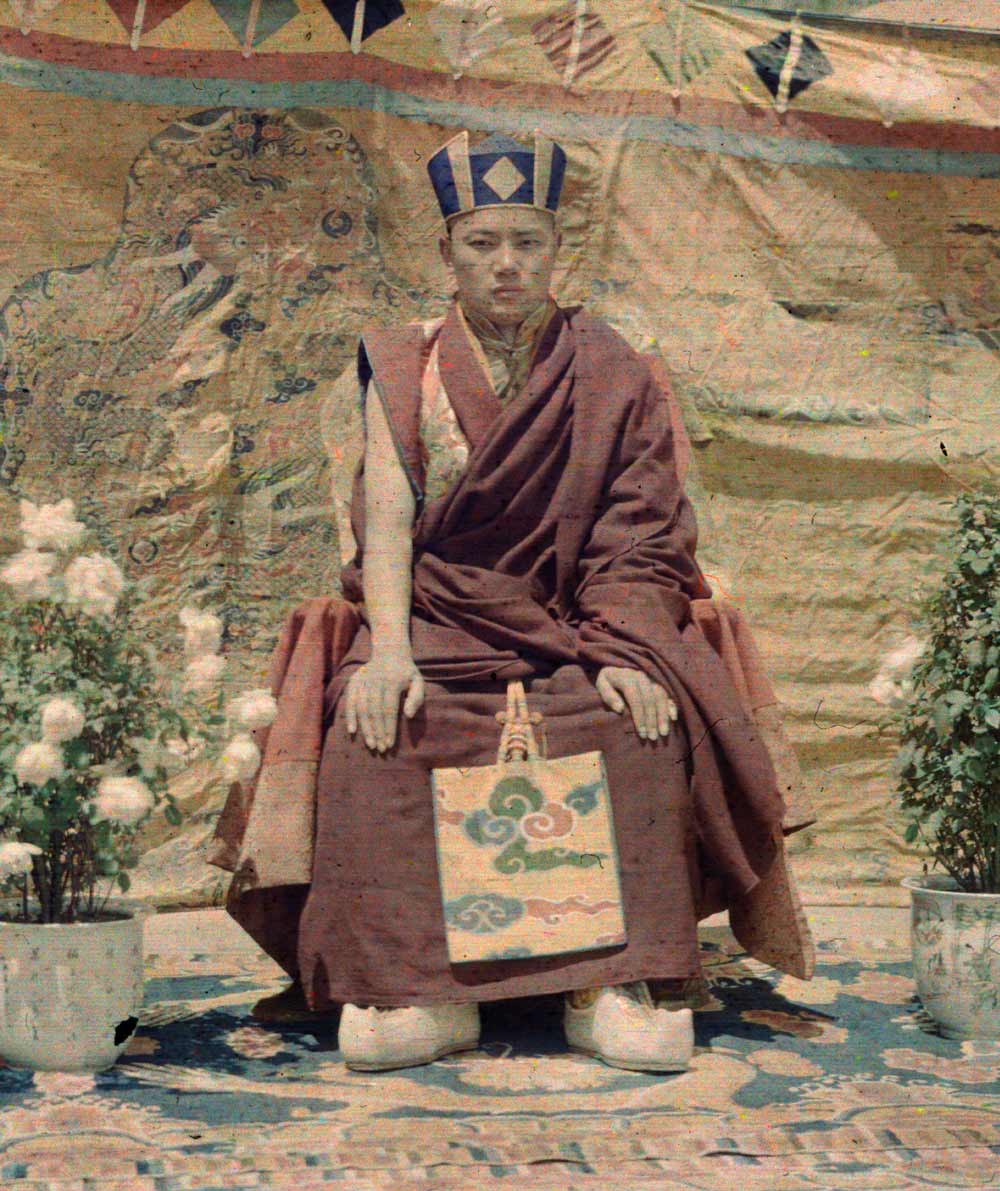
Biography of the 16th Gyalwang Karmapa
The Sixteenth Gyalwang Karmapa, Rangjung Khyapdak Rigpe Dorje, was born in Denkhok in the Derge province of east Tibet, near the Golden River, commonly known as Drichu. His father, Tsewang Ngondrup, who held the rank of a Prince of Derge, was from a noble family called Athup. His mother was named Kalzang Chöden. He was born on the fifteenth day of the sixth month of the Wood-Mouse year (1924), amidst many wondrous signs and indications of the birth of a great being.
From the very beginning of his conception, the Fifth Dzogchen Rinpoche Thupten Chökyi Dorje had predicted that he would be an emanation of a great bodhisattva, and chose for the place of birth a secluded pure environment called “Lion Sky Cave.” He had provided guidance on cleansing ceremonies for the birth preparation, and subsequently conferred the name Thupten Gelek.
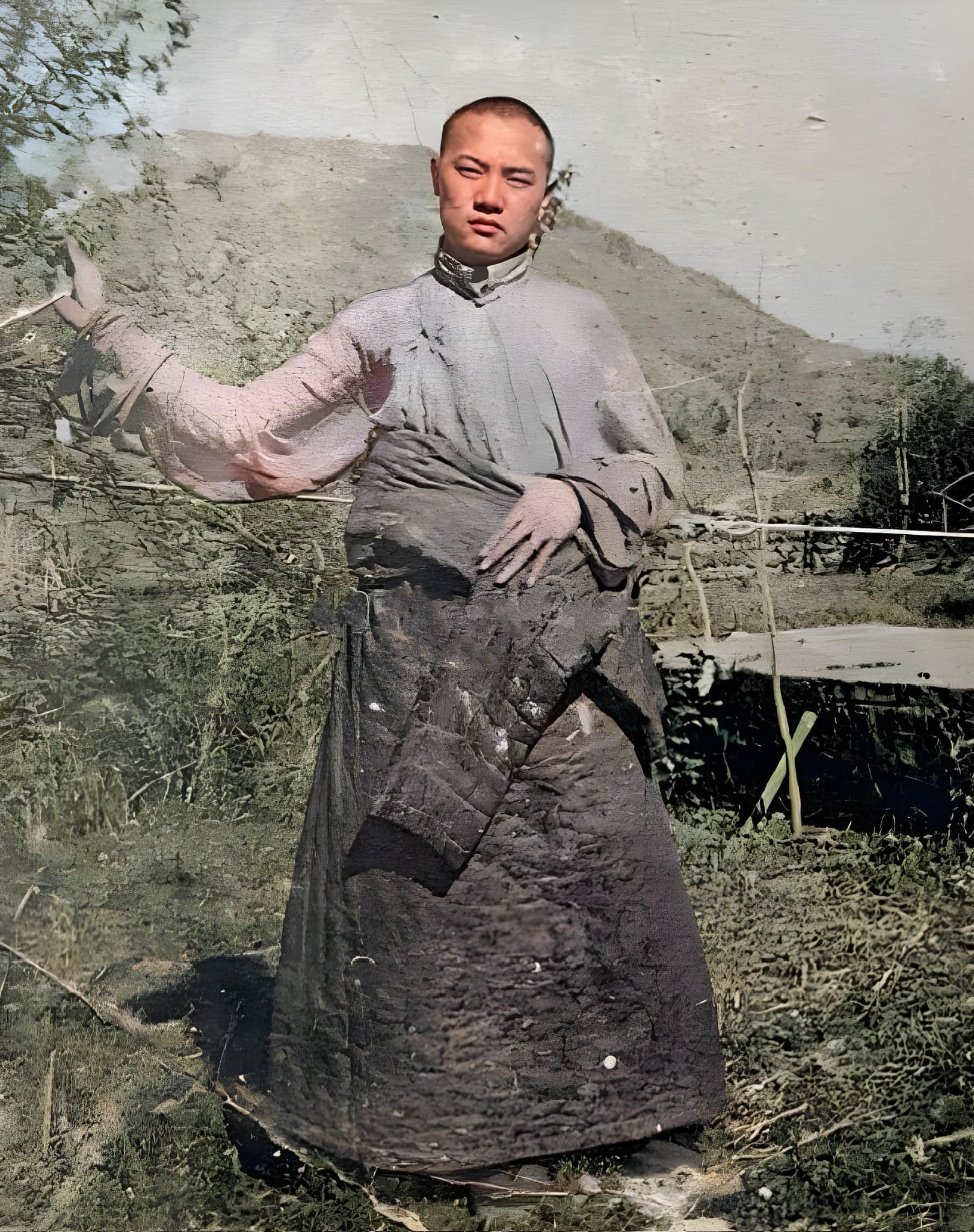
It is said that at one point toward the very end of the pregnancy, the future Karmapa disappeared entirely from his mother’s womb for a whole day. The day of his birth, his mother returned to her normal pregnancy size and soon gave birth to this great bodhisattva. Those present heard him say to his mother that he would be leaving soon.
Tai Situpa had a dream of the Fifteenth Karmapa, in cross-legged meditation posture, holding a bell and dorje and floating above the home of his parents. Before recognizing the incarnation, he checked the details of the birth with those in the prediction letter given by the Fifteenth Karmapa to his student, Gelong Jampal Tsultrim. The letter had been written in a cipher. Jampal Tsultrim handed the letter to the authorities at Tsurphu Monastery, who then asked Tai Situpa, Beru Khyentse, and Jamgön Kongtrul to decode it and clarify the points.
A search party subsequently located the incarnation based on the details of the letter. The Eleventh Tai Situpa soon recognized the child as being the new reincarnation of the Gyalwang Karmapa and sought confirmation from His Holiness the Dalai Lama. Eventually, the Dalai Lama gave his acknowledgment.
At the age of seven, Tai Situpa and Jamgön Kongtrul came to the home of his father, and offered the long life empowerment, a haircut ceremony, full upasaka vow and the name Palden Rangjung Rigpe Dorje, as predicted in the Fifteenth Karmapa’s Last Testament.
When he was eight years old, he traveled to Palpung at the invitation of Tai Situpa. On the way to Palpung Monastery, he was received by the King of Derge with a grand reception and also stopped to visit and bless the Derge monastic publishing house, foreshadowing his publication of the Buddhist canon in India. An initial enthronement as the Sixteenth Karmapa, Rangjung Khyabdak Rigpe Dorje, from Tai Situpa took place in Palpung. At Palpung he began to receive his basic education from Geshe Tashi Tsering.
A delegation arrived from Tsurphu to invite the Karmapa. Tai Situpa then accompanied him on the long journey to Tsurphu. Along the way, at one of the grand receptions for him during his journey, he was met by the General Secretary, who offered the Karmapa the Black Crown and ceremonial robes brought to him from Tsurphu. At that time, the young Karmapa performed the first Vajra Crown ceremony, and many auspicious and wondrous signs arose. Upon his arrival in Tsurphu, the new incarnation was greeted by Goshir Gyaltsab Rinpoche, Nenang Pawo Rinpoche and many other masters, as well as the whole sangha.
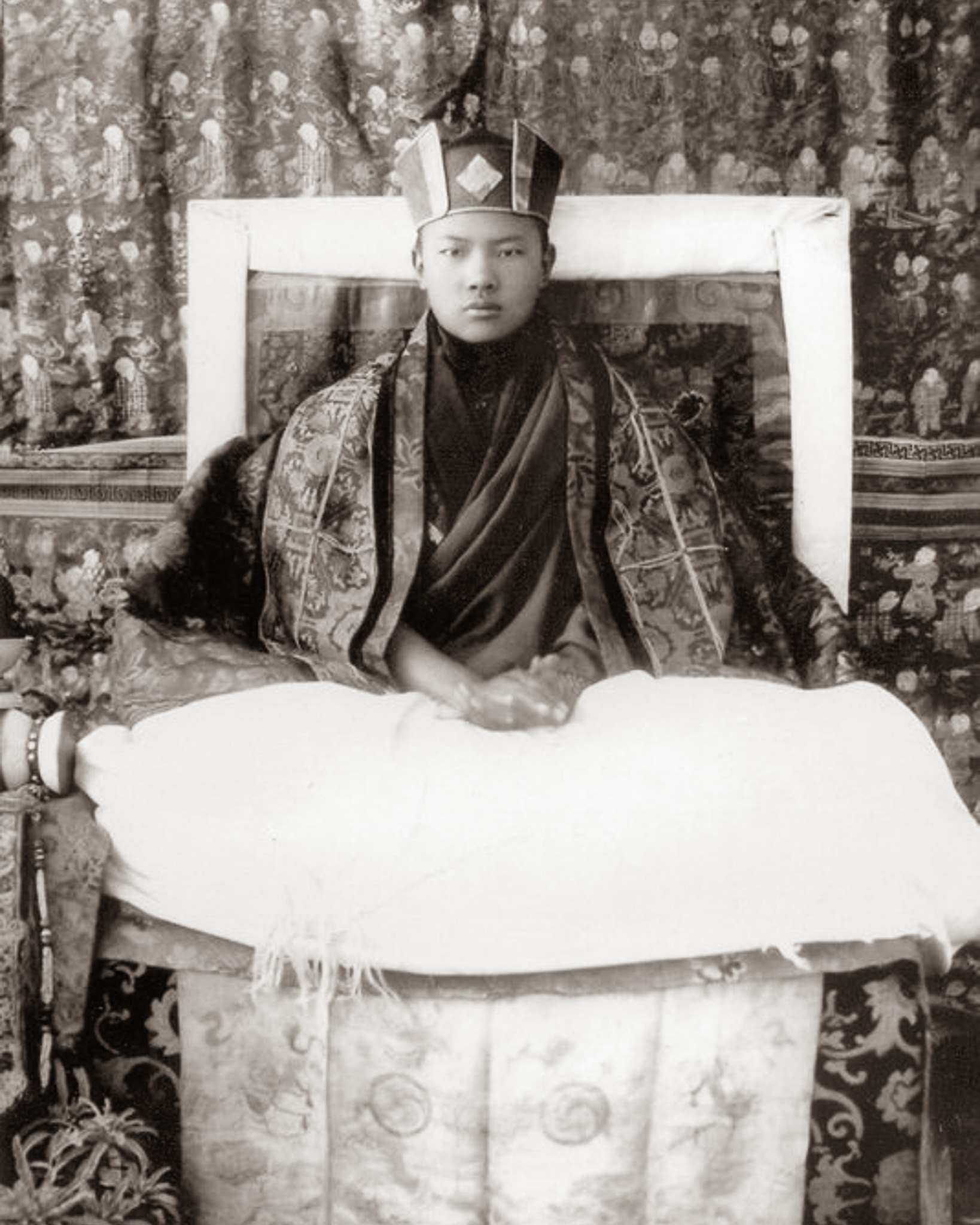
Soon after his arrival at Tsurphu, the Sixteenth Karmapa traveled to Lhasa and the Thirteenth Dalai Lama performed a haircut ceremony for the Karmapa, conferring upon Karmapa the name Thupten Rigdröl Yeshe, and offered him the composition of a long-life prayer for the Sixteenth Karmapa. While so doing, the Dalai Lama had a vision of the ever-present wisdom crown above the Karmapa’s head. When the Dalai Lama’s chief cabinet officer became concerned that the Karmapa had not removed his hat when meeting the Dalai Lama, he then realized that the Karmapa was not wearing a material hat but was manifesting a wisdom crown, which the officer was momentarily able to percieve.
Shortly thereafter, the Karmapa was officially enthroned at his main seat of Tsurphu, in the presence of Jamgön Tai Situ, Pema Wangchuk Gyalpo, Kyapgon Drukchen, Mipham Chökyi Wangpo, Gyaltsab Trakpa Gyatso, Pawo Tsuklak Mawa, and many other great masters, dignitaries and lay monastic sangha members. The Sixteenth Karmapa began engaging in intensive studies, including the study of many sutrayana texts with Bo Gangkar Rinpoche.
He subsequently traveled to Palpung Monastery. When traveling to Palpung, many extraordinary signs manifested. At a small lake in the Drong Tup area, in the tradition of the Karmapas and their inconceivable activity, Rangjung Rigpe Dorje left his footprints in water. Among his many teachers were Jamgön Tai Situ Pema Wangchuk Gyalpo, from whom he received the major lineage transmissions, empowerments such as the Kagyu Ngagdzö (a collection of the most precious tantric teachings of the Kagyu lineage), and instructions, and whom he took as his principal guru. In all, the Karmapa spent many years at Palpung receiving transmissions from Tai Situ Rinpoche.
At fifteen, while in Palpung, the Karmapa received the novice ordination from Tai Situpa Pema Wangchuk Gyalpo as abbot. Subsequently, he received the bodhisattva vows of both Mahayana lineages of profound view and vast conduct from Tai Situpa, and received the name “Bodhisattva Lodrö Zhiwe Nyingpo Shenpen Chökyi Dawa.” During his stay in Palpung, the Karmapa also traveled extensively in eastern Tibet, including a trip to Dzongsar Monastery, where he was received by Jamyang Khyentse Chökyi Lodrö, and where the Karmapa performed a Vajra Crown ceremony. At the monastery of Chogyur Lingpa, the Karmapa’s arrival resulted in the end of a long drought that had been afflicting the monastery. Karmapa also visited the Lithang Pangphuk monastery, where he left footprints in solid rock. On his way back to Tsurphu in 1940, he conducted the haircutting ceremony for Trungpa Chökyi Gyamtso in Surmang. Also on that trip, he visited Benchen monastery, Thrangu and many other monasteries.
Upon arrival back in Tsurphu, the Karmapa paid his first respects to Tenzin Gyatso, the newly recognized Fourteenth Dalai Lama. Between 1941 and 1944, the young Karmapa spent much time in retreat at Tsurphu monastery, which underwent expansion during this period.
After returning to Tsurphu, in 1946 at the age of twenty-three, he received the full ordination from Tai Situ Pema Wangchuk Gyalpo as abbot. He engaged in restoring and built new temples in Tsurphu and refined monastic practice and study training at Tsurphu.
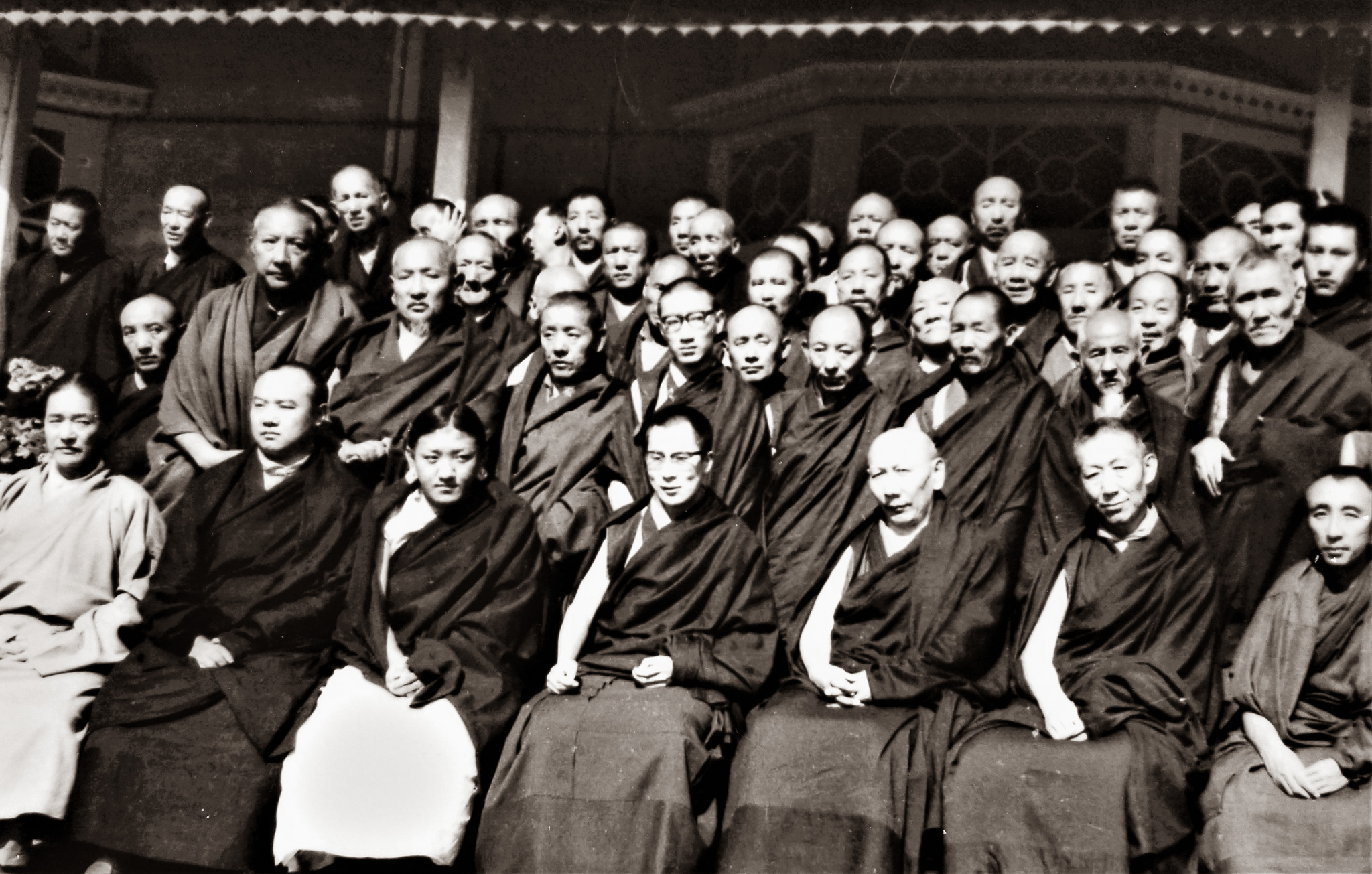
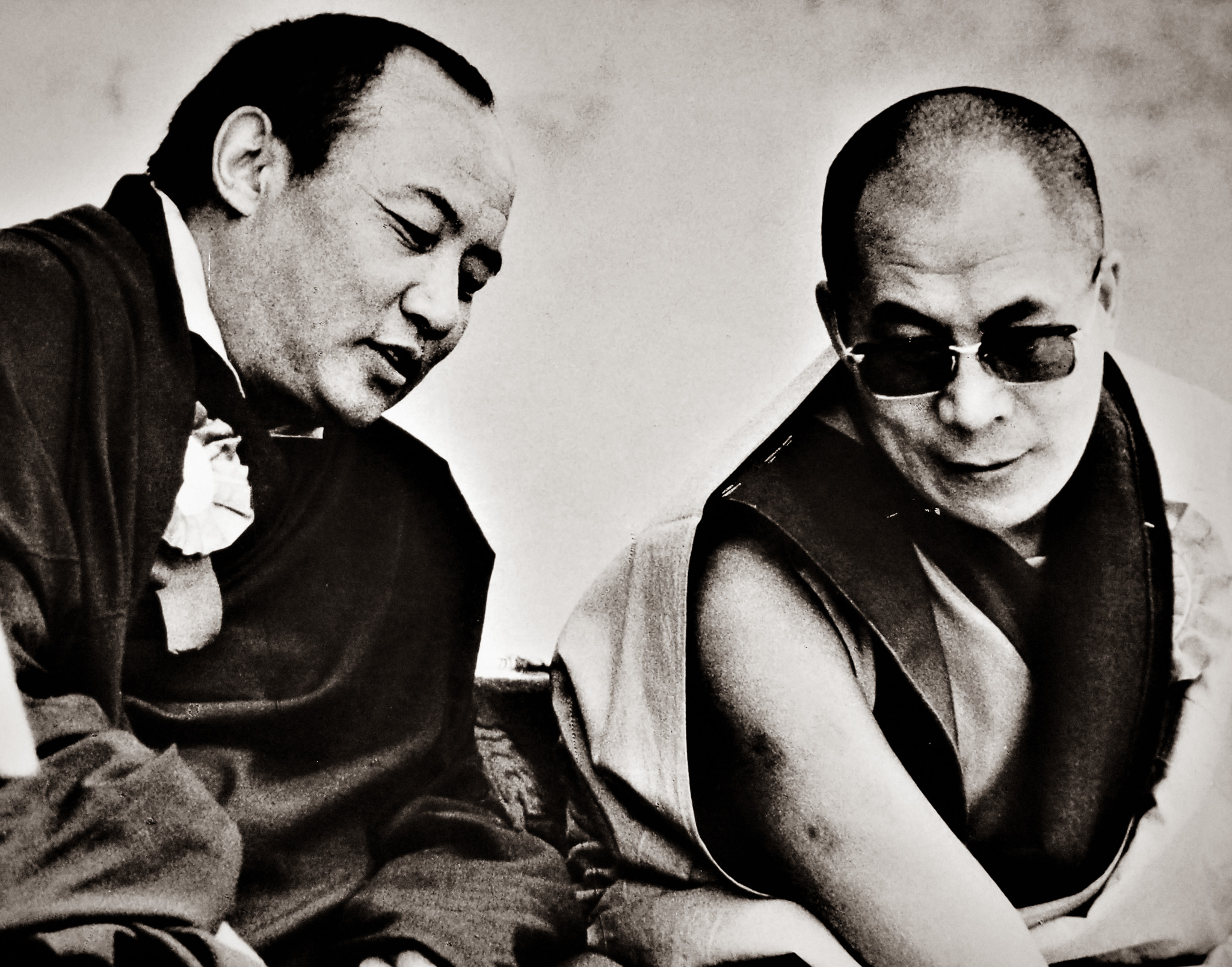
In 1954, the Karmapa sent a prediction letter providing the details of the rebirth of the Third Jamgön Kongtrul incarnation; the second had passed into parinirvana in 1952. Also in that year, with the Dalai Lama, the Karmapa and other high lamas of Tibet visited China. Returning to Tibet, the Karmapa went to Palpung to enthrone the reincarnation of Tai Situpa. Returning to Tsurphu, he stopped at many monasteries in eastern Tibet. In 1955, His Holiness the Dalai Lama visited Tsurphu. Two years later, in 1957, the Karmapa and party traveled to Sikkim and from there continued on pilgrimage to India. The Dalai Lama, the Panchen Lama, and the Karmapa had all been invited by the Mahabodhi Society of India to join the celebration of the 2,500th anniversary of Buddhism. During this trip, the Karmapa and his party revisited the holy sites of India as pilgrims.
Also during this visit, the Karmapa strengthened his ties to his disciples Chögyal Tashi Namgyal, the King of Sikkim and King Jigme Dorje Wangchuk of Bhutan, as well as Jetsun Tsultrim Palmo, the Bhutanese Buddhist princess. While in Sikkim, the King of Sikkim invited him to visit Rumtek, the monastery in Sikkim that the Ninth Karmapa had founded at the end of the sixteenth century. The Karmapa was unable to accept the invitation at that time but said that he would go there in the future when it would be needed. The Karmapa returned from pilgrimage to Tsurphu in 1957. He recognized the reincarnation of Gyaltsabpa, and conducted a haircut ceremony and enthroned him in Tsurphu.
Since the mid-1950’s, hostilities between Chinese troops and residents of eastern Tibet had been growing, and the troubles soon expanded to other regions throughout Tibet. The Karmapa did what he could to mediate the conflicts. He had forseen the development of such troubles, predicting in his composition in 1944 entitled “The Song Whose Time Has Come: The Melodius Hum of a Bee,” that he would soon be required to leave Tsurphu. He had in fact advised some of his students to leave, but himself stayed behind as long as possible. The Sixteenth Karmapa had foreseen the “untold grief ” leaving his “fledgling” disciples behind would cause. However, by 1959, time had run out.
In the Spring of 1959, the Karmapa informed the Dalai Lama of his intention to leave his homeland. Later that year, accompanied by a large entourage, the Karmapa left Tsurphu and fled Tibet. The escape was headed by the General Secretary for the Karmapa, Damchö Yongdu. The traveling party included the reincarnation of Shamar Rinpoche, the young Gyaltsabpa, the Karmapa’s younger brother Ponlop Rinpoche, Dabsang Rinpoche, meditation master Dilyak Drupon Tenzin, and many other masters. The party brought with them whatever they could of the sacred heritage of the Karmapas, including the famous Vajra Crown, statues, paintings, books, reliquaries, and other precious items of the lineage of the Karmapas. The timing and organization of the departure, aided by the foresight of the Karmapa in scheduling the journey, made for relatively easy travel to the border of Bhutan. After three weeks, the party arrived safely in northern Bhutan, where the most senior Bhutanese government officials received them, including Jetsun Tsultrim Palmo, the Bhutanese Buddhist princess. Subsequently, the Karmapa received the King of Bhutan and stengthened their spiritual relationship. The King of Bhutan, and the whole of the Bhutanese citizenry, offered a warm welcome and great service to the party.
Tashi Namgyal, the King (Chögyal) of Sikkim invited the Karmapa to visit, and shortly thereafter the Karmapa received two delegations, one headed by Minister Banyak Athing, representing the government of Sikkim, and the other headed by Minister Atuk Babu, representing the government of India. When the Karmapa arrived in Sikkim, King Tashi Namgyal offered the Karmapa the opportunity to establish his seat in Sikkim. Because of the connection established in the early 1700s between the Twelfth Karmapa Changchub Dorje and the King of Sikkim, the Karmapa accepted Tashi Namgyal’s offer. Two months after entering Bhutan the party arrived in Gangtok, Sikkim. Tai Situpa joined the Karmapa at that time. Of the several sites proposed by the King of Sikkim, the Karmapa chose to settle at Rumtek, stating that Rumtek would be his seat outside Tibet, although he planned one day to return to Tsurphu. Shortly after the Chögyal extended his offer, the Karmapa and his party left Gangtok for Rumtek.
Established many centuries earlier through the blessings of the Ninth and Twelfth Karmapas, by 1959 Rumtek Monastery was almost in ruins. The surrounding area was also undeveloped and had no facilities for supporting the Karmapa and his party. The Karmapa, teachers, and community lived in temporary quarters for many years as resources were gathered to begin construction of new facilities to support the Karmapa’s monastic seat and surrounding lay community. During this period, the young incarnation of Jamgön Kongtrul joined the Karmapa. His Holiness performed the hair-cutting ceremony, enthroned him as the Third Jamgön Kongtrul, and conferred many empowements upon him. In 1962, Benchen Sangye Nyenpa Rinpoche and Ponlop Rinpoche passed away in Rumtek.
Construction to build a new seat for the Karmapa at Rumtek began when the foundation stone of the new monastic center was laid by the new king of Sikkim, who had assumed responsibility for the kingdom after his predecessor had passed away. Construction was led by the Karmapa’s General Secretary, Damchö Yongdu. It was funded primarily through the generosity of the Sikkimese royal family and that of the Indian government, the latter funding arising from the Karmapa’s meeting with Pandit Nehru.
The Karmapa requested His Holiness the Fourteenth Dalai Lama to allow the recognition of the Shamar Rinpoche line of reincarnate masters (which had been abrogated in 1791 by Chinese Imperial edict). After His Holiness agreed, the Karmapa recognized the Shamar incarnation in 1964. He also recognized the incarnations of the Twelfth Kyapgön Drukchen and Sangye Nyenpa Rinpoche. Construction of Rumtek was completed in 1965, and the sacred items and relics brought from Tsurphu were installed there. On Tibetan New Year’s Day, the Sixteenth Karmapa officially inaugurated the new seat, called “The Dharmachakra Centre, a place of erudition and spiritual accomplishment, the seat of the glorious Karmapa.” From that time forward, the Karmapa began the process of reinstituting the study and practice traditions of the Karmapas as had been continued over the centuries at Tsurphu, Karma Gön and the Karmapas’ other seats and meditation retreats in Tibet. The Sixteenth Karmapa appointed Venerable Thrangu Rinpoche as Chief Abbot and Venerable Tenga Rinpoche as Vajra Master of the new main seat in Rumtek. The Sixteenth Karmapa established a three year retreat center in Sikkim and appointed Venerable Bokar Rinpoche as the Retreat Master. The Karmapa established many monasteries and retreat centers in Bhutan, Sikkim, Nepal, Ladakh and many other parts of India. In Calcutta, he established Karma Gön. He trained many eminent rinpoches, lamas and monks at his main seat in Rumtek. The Karmapa recognized many incarnations, including the Dzogchen Ponlop Rinpoche, whom he enthroned in 1968, and the Dilyak Drupon Tenzin Rinpoche.
From the early 1960’s, the Karmapa inspired and gave guidance to many Kagyu masters for bringing the genuine lineage teachings of wisdom and compassion to Western countries, Africa, southeast Asia and Australia. He established many centers in the West, in America, Canada, and Europe, such as Karma Triyana Dharmachakra in New York, and in Asia. Under the guidance of the Karmapa, hundreds of dharma centers have been established throughout the world and thousands of dedicated and enthusiastic students have been trained in the study and meditation practices of the Buddhadharma.
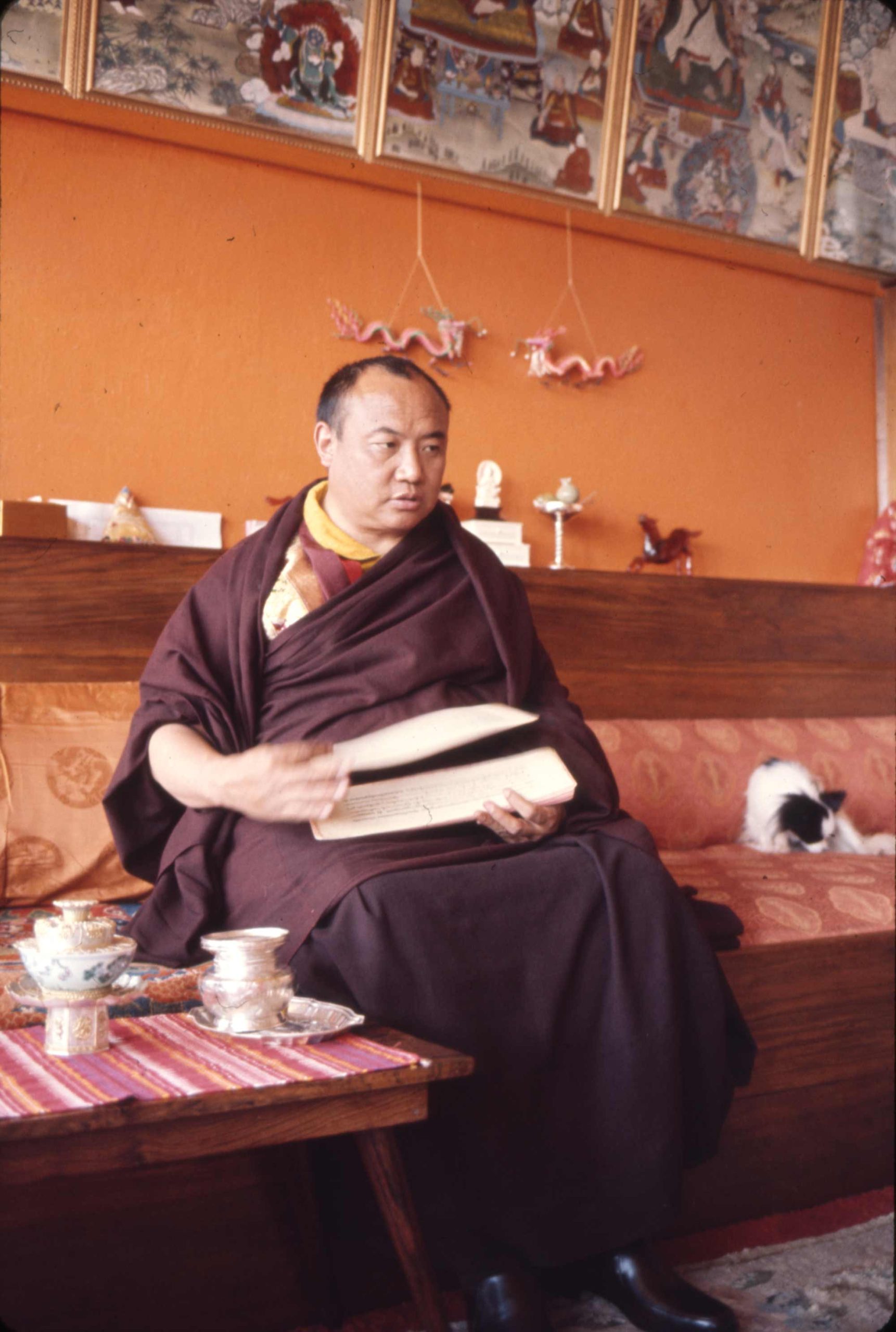
In 1974 the Sixteenth Karmapa set out on his first world tour, visiting the United States, Canada, and Europe. Accompanied by other teachers, and a full entourage of monks and staff, he performed the Black Crown ceremony in the Western hemisphere for the first time, gave empowerments, and provided Dharma advice. In January the next year, the Karmapa flew to Rome and met with Pope Paul VI.
During 1976-77, the Karmapa again traveled to the West for a more extended visit, followed by a wide-ranging world tour. He visited religious centers on four continents and met heads of state, religious leaders, elders of many traditions, and people from the world of the arts.
On November 28, 1979, the Karmapa laid the ground for the construction of Karme Chökor-Ü (Karme Dharma Chakra Central) in New Delhi, at a ceremony attended by the president and prime minister of India. The Centre was envisioned as an international study, practice, and translation center. During this time also, the Karmapa engaged in an extensive preservation and publication process to conserve endangered Buddhist scriptures. During the late 70s and 80s, he arranged for the publication and distribution of the Kangyur (the translated words of the Buddha Shakyamuni) and the Tengyur (the translated treatises of Indian masters). The Kangyur was distributed without cost to all the schools of Tibetan Buddhism, and the Tengyur was distributed for a nominal fee.
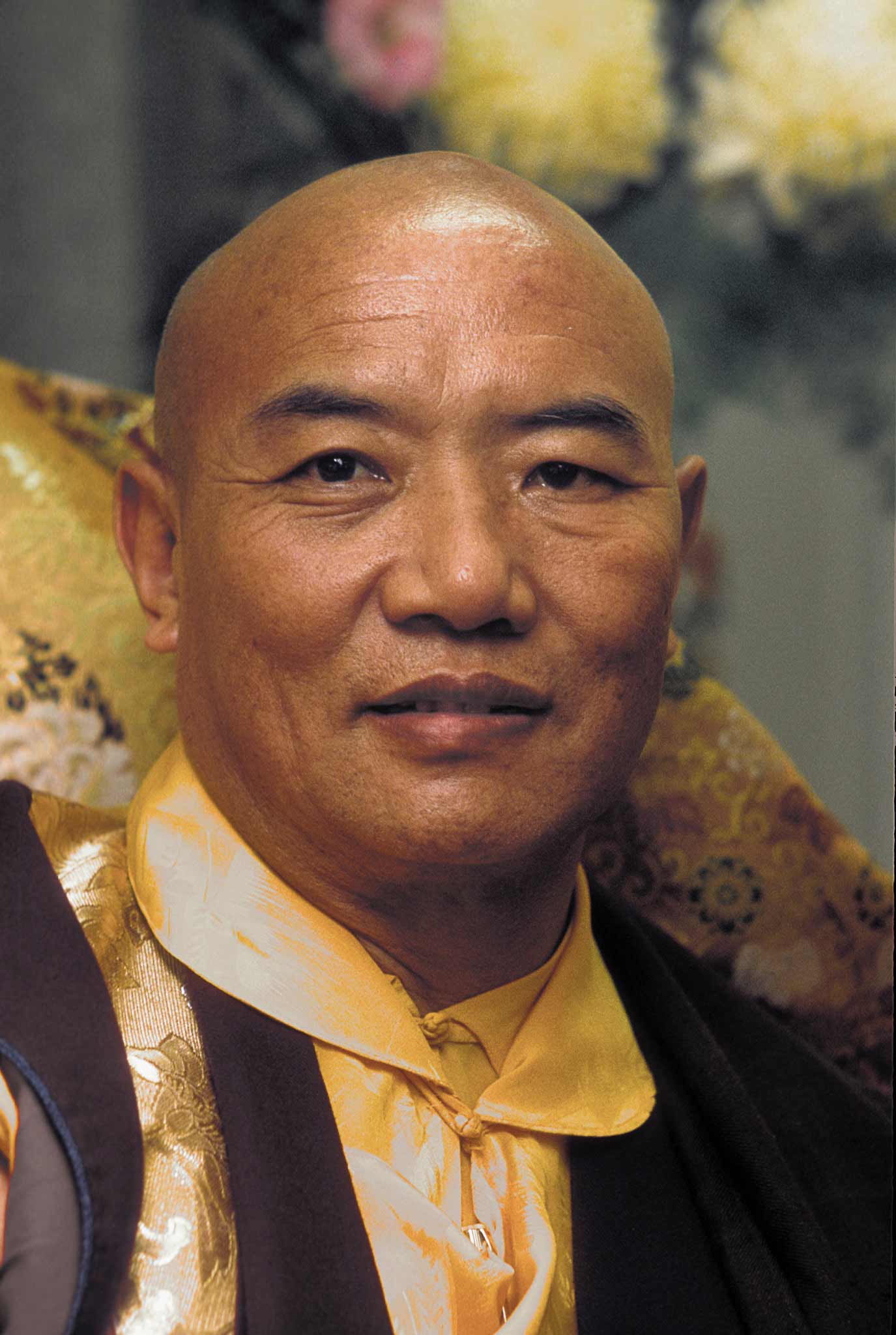
The Karmapa’s last world tour began in May 1980 and took him to Greece, England, the United States, and Southeast Asia, where he gave teachings, Black Crown ceremonies, empowerments, interviews, audiences, and engaged in many beneficial activities.
The Sixteenth Karmapa’s Last Testament was extensive and detailed, consisting of a number of prophetic poems and a detailed letter. Although he had predicted in 1944 that he would someday be forced to leave Tsurphu, he also promised in that poem that he would someday return “in great joy” to Tsurphu. “In January of 1981, he gave to his heart son, the Twelfth Tai Situpa, a protection amulet with a brocade cover, and said, “This is your protection amulet. In the future, it will confer great benefit.” Many years later, the amulet was discovered to contain the Sixteenth Karmapa’s Last Testament giving details about the birth of the Seventeenth Karmapa:
Emaho.
Self-awareness is always bliss;
The dharmadhatu has no center nor edge.
From here to the north [in] the east of [the land] of snow
Is a country where divine thunder spontaneously blazes
[In] a beautiful nomad’s place with the sign of a cow,
The method is Döndrub and the wisdom is Lolaga.
[Born in] the year of the one used for the earth
[With] the miraculous, far-reaching sound of the white one;
[This] is the one known as Karmapa.
His is sustained by Lord Donyö Drupa;
Being nonsectarian, he pervades all directions;
Not staying close to some and distant from others, he is the protector of all beings:
The sun of the Buddha’s Dharma that benefits others always blazes.
In 1980, the Karmapa began the construction of Karma Shri Nalanda Monastic College (Shedra), which was to become the central institution for providing complete and comprehensive training for monastics in all aspects of Buddhist studies in general and in the Kagyu lineage view in particular. He also provided the complete roadmap for the Shedra by drafting the curriculum for students and creating an operating plan for the school. The Shedra was blessed by the Dalai Lama and later officially inaugurated shortly after the Karmapa entered parinirvana in 1981.
The ashes from the cremation fire were distributed, and afterwards numerous people found that relics spontaneously arose over time from those ashes. The main relics of the Karmapa were subsequently enshrined in a large golden stupa at Rumtek. The Karmapa also left a thuk-jakchen-sum at the cremation, which was subsequently enshrined in a small golden stupa. This stupa project was completed by the General Secretary Damchö Yongdu, and the stupa consecration ceremony was held in 1982 on Lha Bab Duchen. The ceremony was attended by the all members of the council of regents, His Holiness Dilgo Khyentse Rinpoche, Kyabje Kalu Rinpoche, and many other eminent masters, as well as lamas and disciples. The General Secretary passed away in Bhutan some few weeks later.
Bibliography

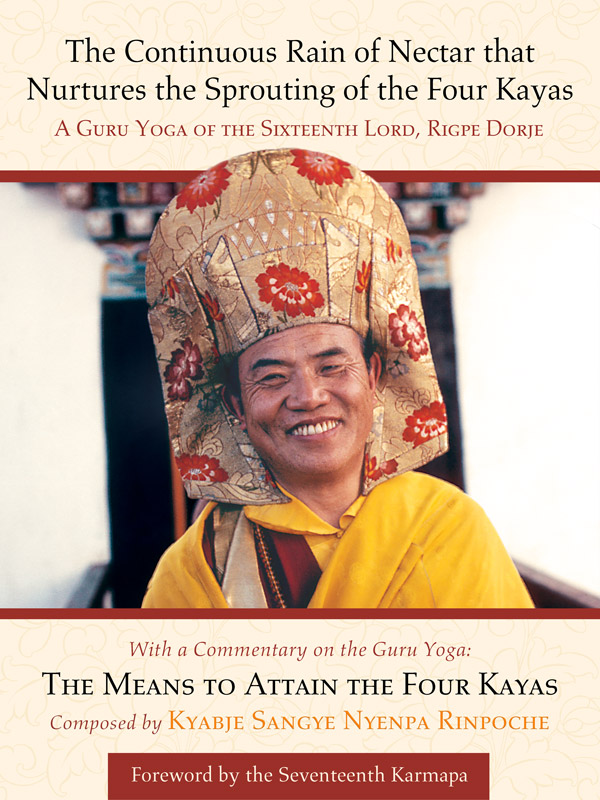
The Continuous Rain of Nectar that Nurtures the Sprouting of the Four Kayas: A Guru Yoga of the 16th Lord, Rigpe Dorje. With a recitation by the 17th Gyalwang Karmapa. Available in Tibetan, English, Chinese, Italian, Russian, and Ukrainian.
Dharma Ebooks, 2020
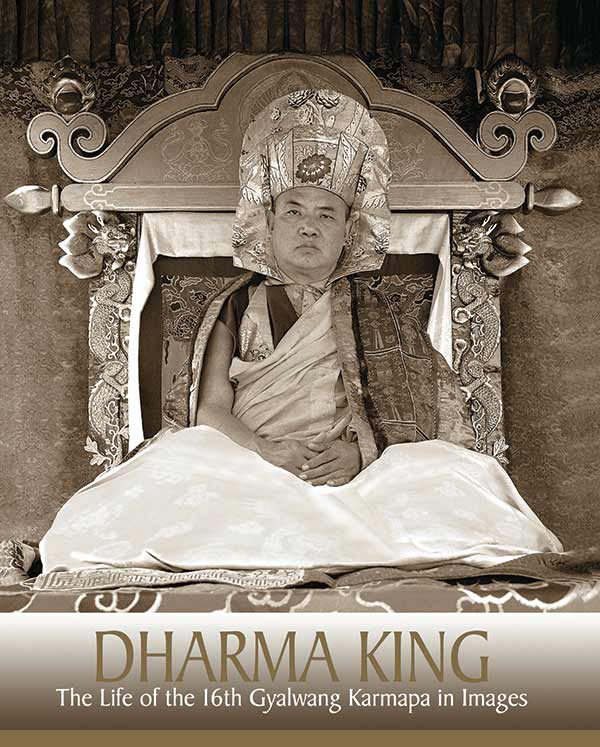
Produced under the Guidance of The 17th Gyalwang Karmapa, Ogyen Trinley Dorje.
KTD Publications, 2016
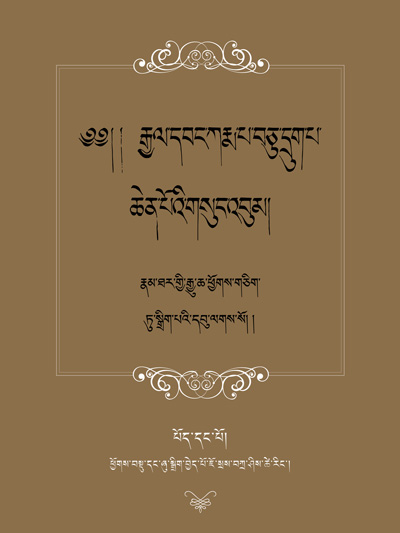
Collected works of the 16th Gyalwang Karmapa in Tibetan, 3 volumes.
Tsurphu Labrang and The Amnye Machen Institute, 2015
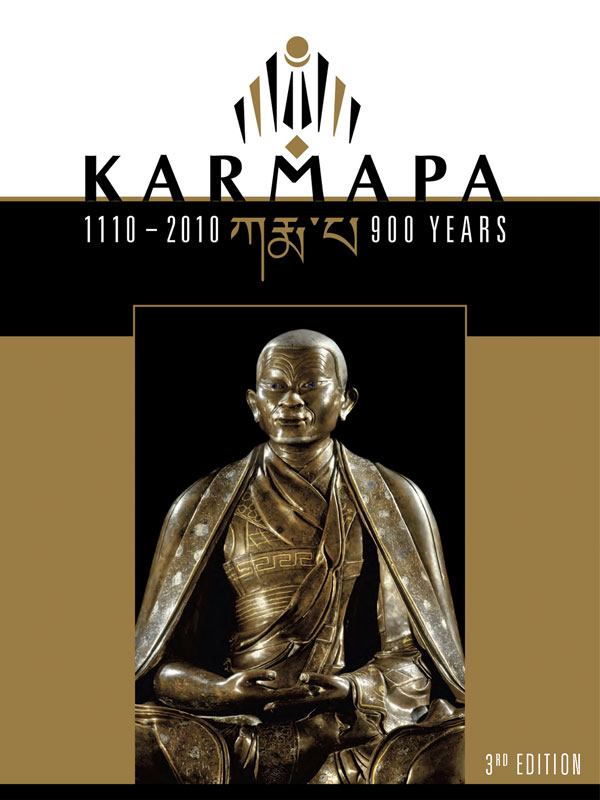
H.E. Sangye Nyenpa Rinpoche’s commentary on A Guru Yoga of the Sixteenth Lord, Rigpe Dorje. Available in English, Tibetan and Chinese.
Dharma Ebooks, 2020
Produced under the guidance of the 17th Gyalwang Karmapa. This revised and updated ebook edition was first published in 2017 in cooperation with KTD Publications.
Lhundup Damcho (Diana Finnegan)
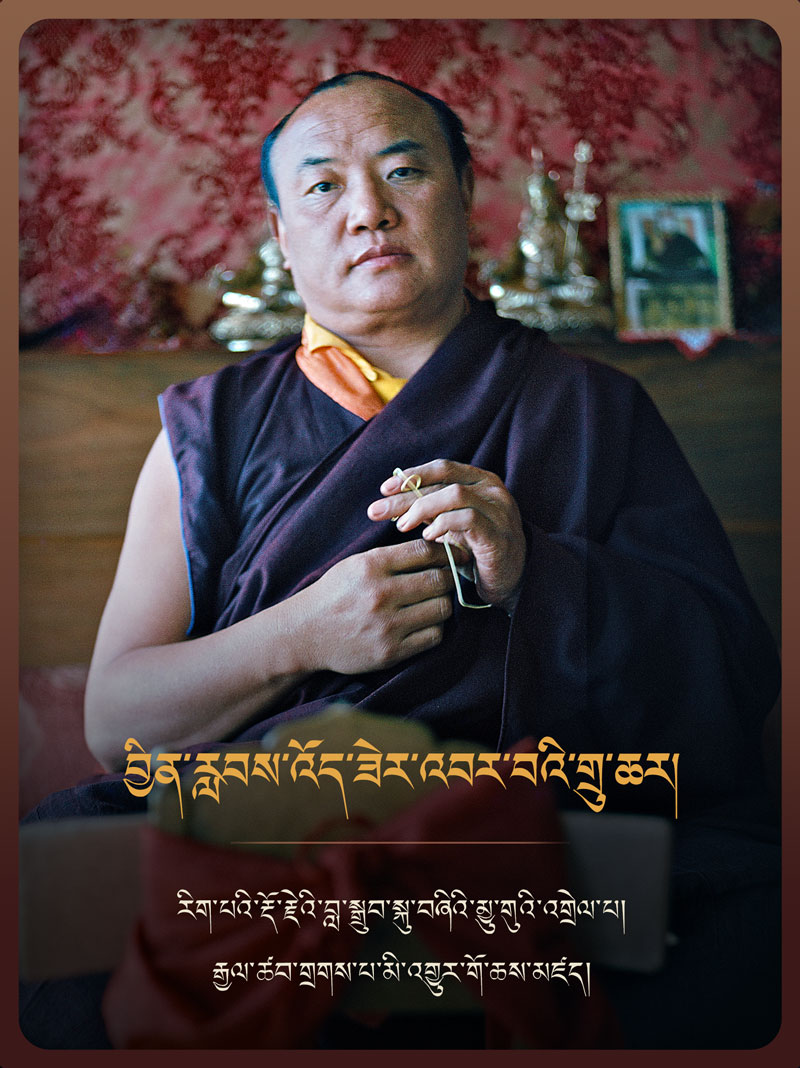
A commentary on the 16th Karmapa's Guru Yoga composed by H.E. Goshir Gyaltsab Rinpoche.
Dharma Ebooks, 2024
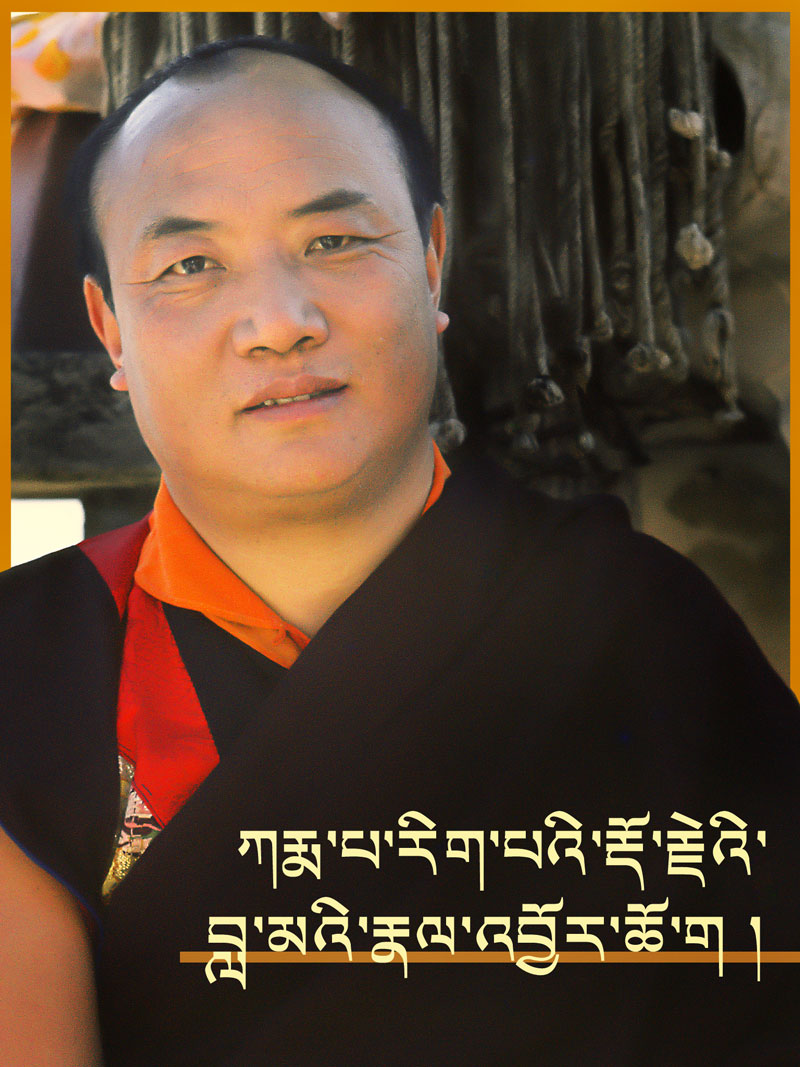
A ritual of the 16th Karmapa's Guru Yoga and other prayers compiled by Khenpo Khyodrak Gawang.
Dharma Ebooks, 2021
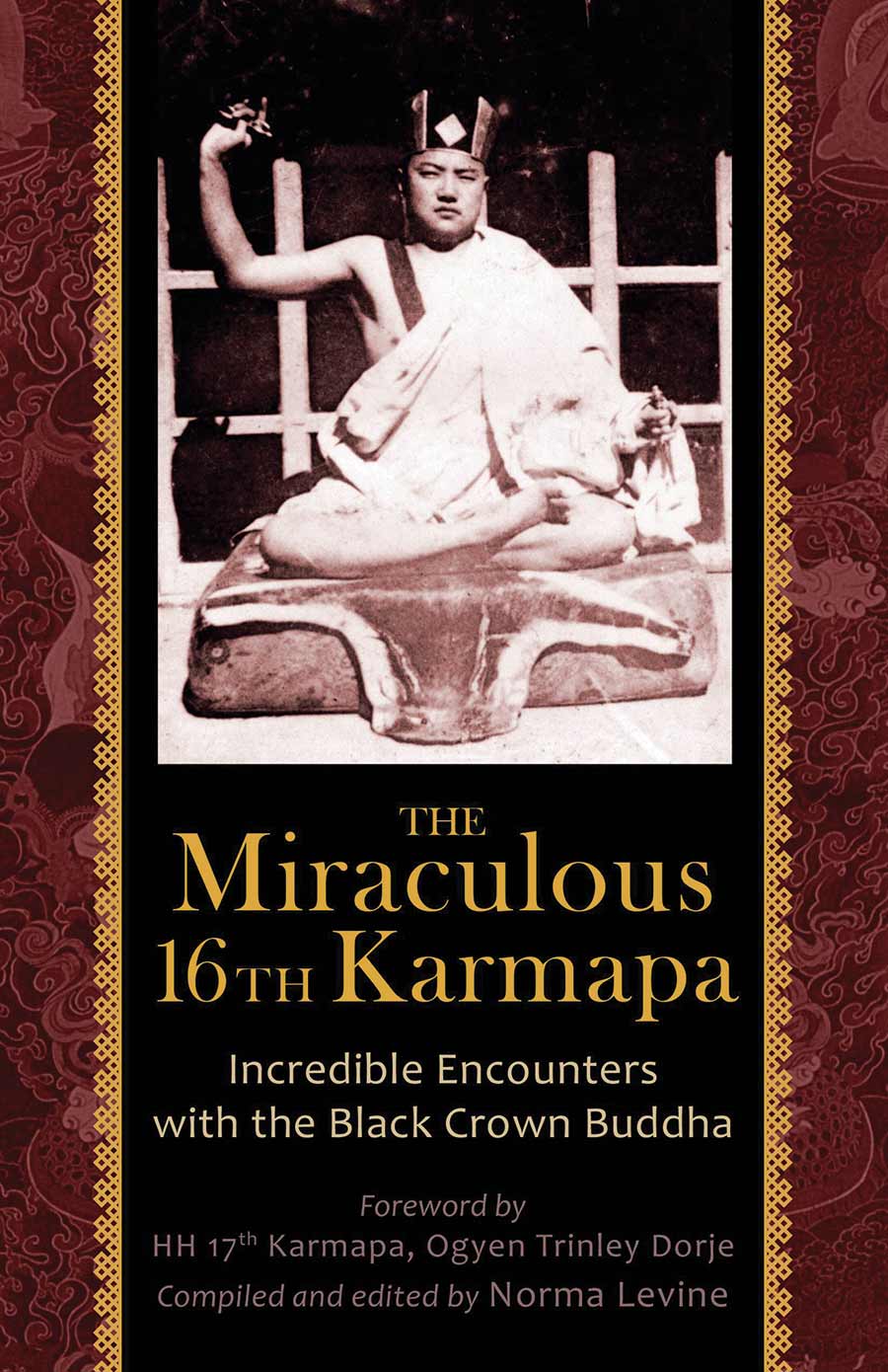
Incredible Encounters with the Black Crown Buddha
Norma Levine
Shan Shung Publications, 2013
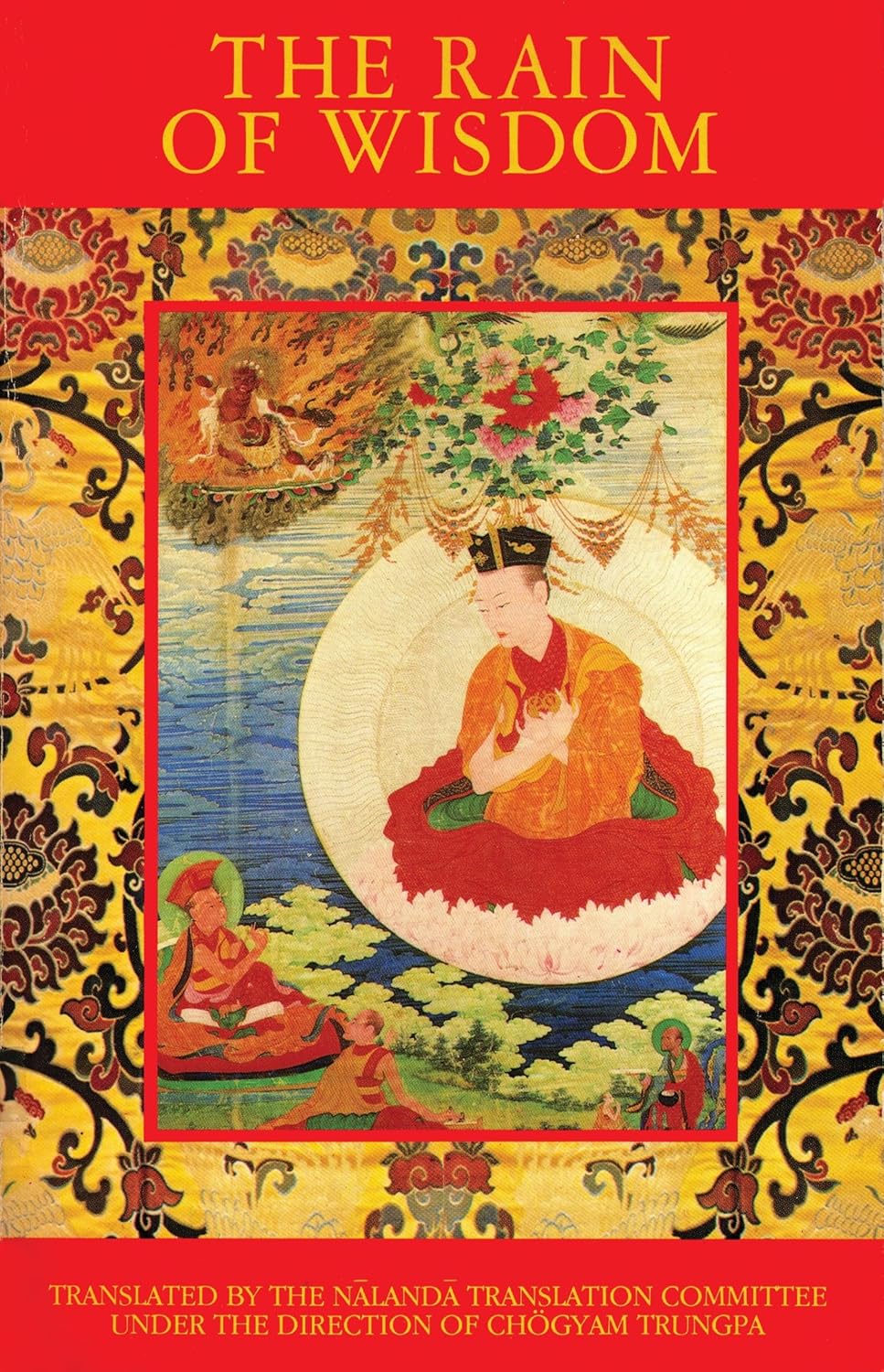
Sacred songs of Kagyu teachers, including a proclamation by the 16th Karmapa and several of his songs.
Nalanda Translation Committee, Shambala Publications, 1999

Nalandabodhi Publications, 2006
Follows the Sixteenth Karmapa across North America as he visits the Hopi Nation, visits zoos and performs the Black Crown Ceremony.
Mark Elliot, Festival Media, 2000

Contributors: Chogyam Trungpa, Chokyi Nyima Rinpoche, Dalai Lama, Dzogchen Ponlop Rinpoche, Gene Smith, Gregg Eller, Judith Lief, Karmapa XVI, Khandro Rinpoche, Khyentse Norbu, Tenzin Palmo, Traleg Rinpoche.
Tendrel Films, 2006

Short biographies of all the previous Karmapas by Dzogchen Ponlop Rinpoche, published by Tsurphu Labrang, Karmapa's Office of Administration. In Tibetan and English.
Altruism Press
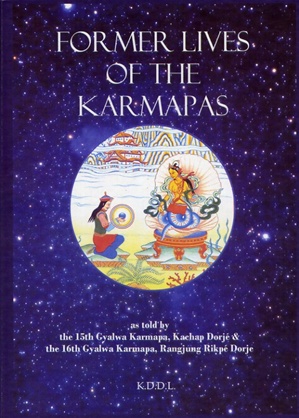
Former Lives of the Karmapas, Dzalendara and Sakarchupa
Holmes, Ken ed.
Stories recounted by the 16th Karmapa about his past lives.
Dzalendara, 1981
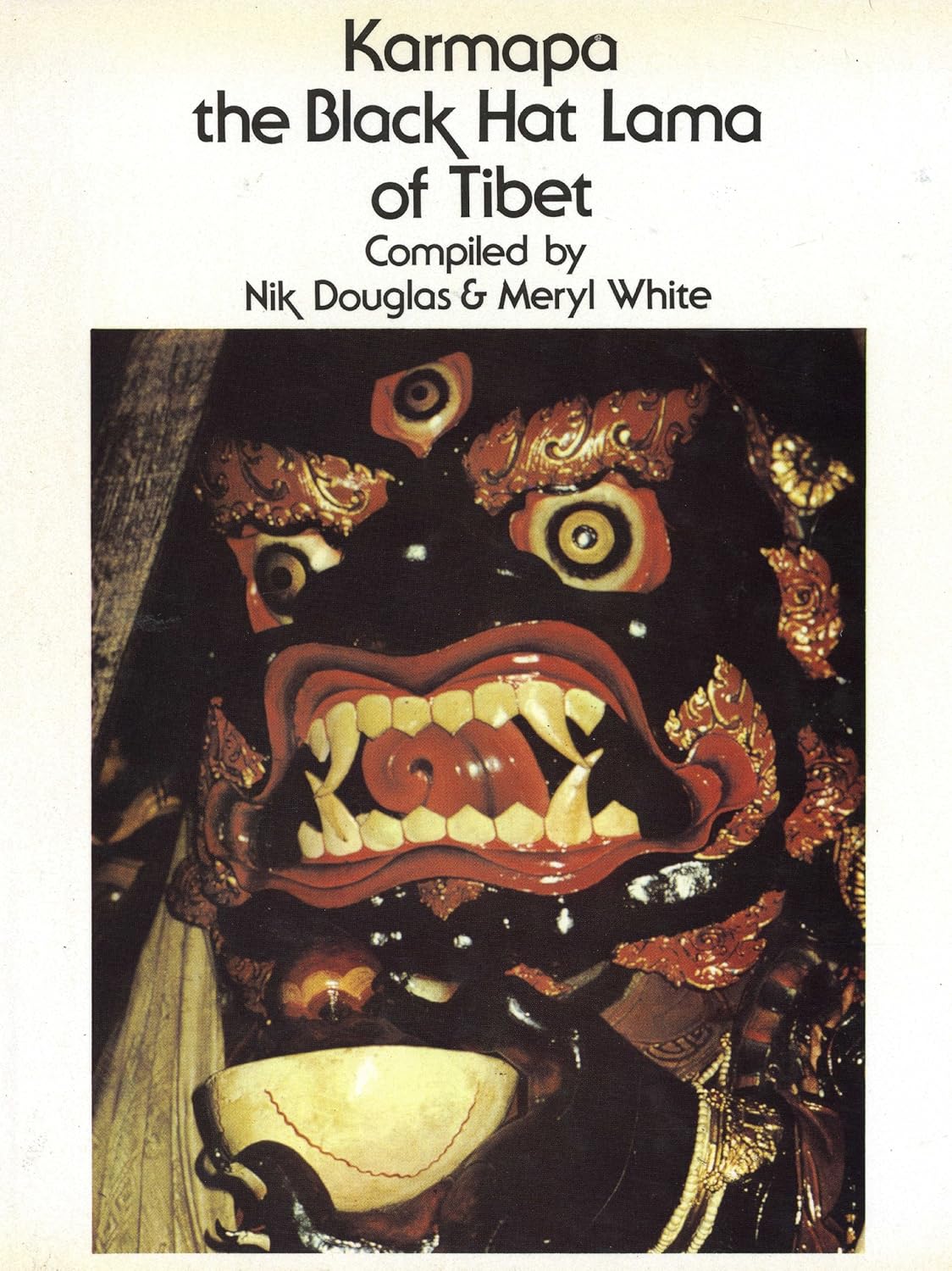
Nik Douglas; Meryl White
The Karmapa life stories tell of the spread of mystic spirituality in the regions of Tibet, China, Mongolia, Nepal, Bhutan and Sikkim and also incorporate the ancient transmission from India.
Luzac & Co., 1976
Audio CD, 47 minutes
Liturgies recorded during His Holiness’ first visit to the United States, including Black Crown Ceremony, Karma Pakshi and Mahākāla Sādhana.
Kalapa Recordings, 1975